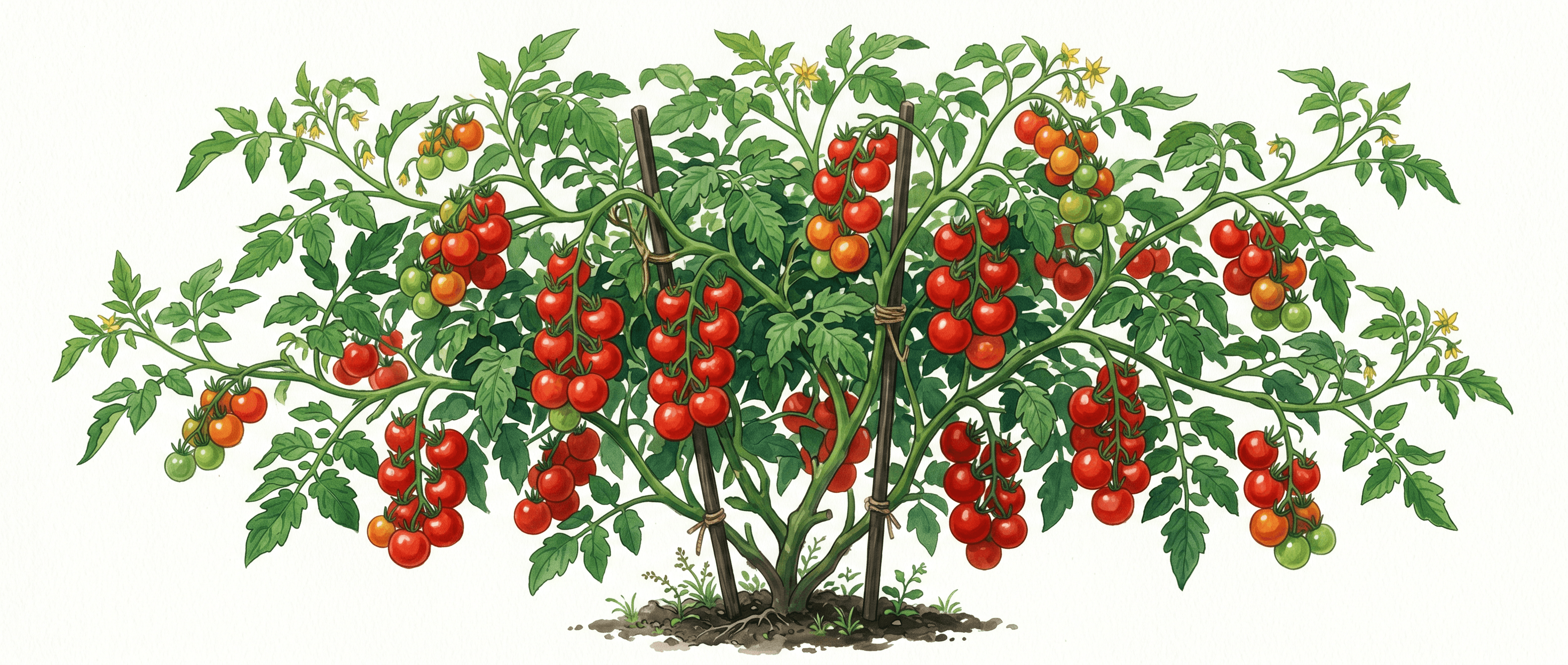
Thriva Boost Usage Guide for Tomatoes
Tomatoes are one of the most rewarding crops for home gardeners, but they are also heavy feeders that require the right balance of nutrients to produce strong plants and abundant fruit. Nitrogen plays a central role in growth, but how and when you apply it makes all the difference.
Why nitrogen matters for tomato plants
Nitrogen is essential for chlorophyll production, which drives photosynthesis and fuels every stage of a tomato plant's development. Tomatoes are classified as heavy feeders because they produce a large above-ground biomass with extensive foliage, sprawling vines (especially indeterminate types), and energy-intensive fruit, all from a single growing season. That demands a consistent and well-timed nitrogen supply.
The ammonium-based nitrogen in Thriva is particularly well suited to tomatoes because it is taken up directly by plant roots and is less prone to leaching through the soil than nitrate forms which means more of what you apply actually reaches the plant.
Tomato growth stages and nitrogen needs
Tomato plants go through three main stages, and each stage has different nutrient needs:
Growth stage | Thriva amount | Notes |
Vegetative (early growth) | 1 oz per plant | Apply at planting or shortly after. Focus: leaf and stem development. A good nitrogen base sets the foundation for plant size and vigor. |
Flowering through early fruit | Remaining 2–3 oz (split) | Split into applications 2–3 weeks apart for a steady feed. The majority of nitrogen is taken up a few weeks after first flowers open and at the early red fruit stage. |
Fruiting (if needed) | Boost as needed | Nitrogen needed if growth stalls and/or leaves yellow and it is not late in the season. Indeterminate varieties may need 1–2 extra applications. |
Determinate vs. indeterminate: Determinate (bush) tomatoes set all their fruit at once and wind down relatively quickly. Indeterminate varieties keep growing and fruiting all season — which means they have a longer nitrogen demand window and often need additional applications beyond the standard schedule. |
How to spot nitrogen deficiency in tomatoes
Nitrogen deficiency is common in heavy-feeding plants like tomatoes, especially in containers or sandy soils where nutrients drain quickly. Watch for these signs:
Yellowing starting with older, lower leaves and progressing upward
Slowed or stalled stem elongation during the active growing season
Pale green overall appearance; stems may take on a purplish tinge
Fewer flowers and smaller fruit than expected for the variety
Avoid late-season over-application: Excess nitrogen late in the season stimulates leafy growth at the expense of fruit ripening. Once plants are winding down and most fruit is set, hold off on additional feeding. Too much nitrogen at this stage can cause heavy leaf production and reduce fruiting. |
Frequently asked questions
How much Thriva do tomatoes need per plant?
Up to 3–4 oz of Thriva per tomato plant over the full growing season. Start with 1 oz during early vegetative growth, then split the remaining amount across 2–3 applications during the flowering and early fruiting stages.
How often should you fertilize tomatoes?
After the initial application at planting, apply every 2–3 weeks through the flowering and early fruiting stages. This steady cadence matches the plant's peak nitrogen demand without overloading it at any one point.
Can you over-fertilize tomatoes?
Yes. Too much nitrogen, especially late in the season, causes plants to put their energy into leaves and stems rather than fruit. Signs of excess nitrogen include very dark green, lush foliage with few flowers or fruit setting.
Do indeterminate tomatoes need more fertilizer than determinate types?
Generally yes. Indeterminate varieties continue growing and setting fruit throughout the season, so their nitrogen demand window is longer. They often benefit from one or two additional Thriva applications compared to determinate bush types.
What does nitrogen deficiency look like in tomatoes?
The most common signs are yellowing leaves (starting from the bottom of the plant upward) and slowed or stalled growth during the active growing season. A mid-season application of Thriva can help correct this if it is not late in the year.