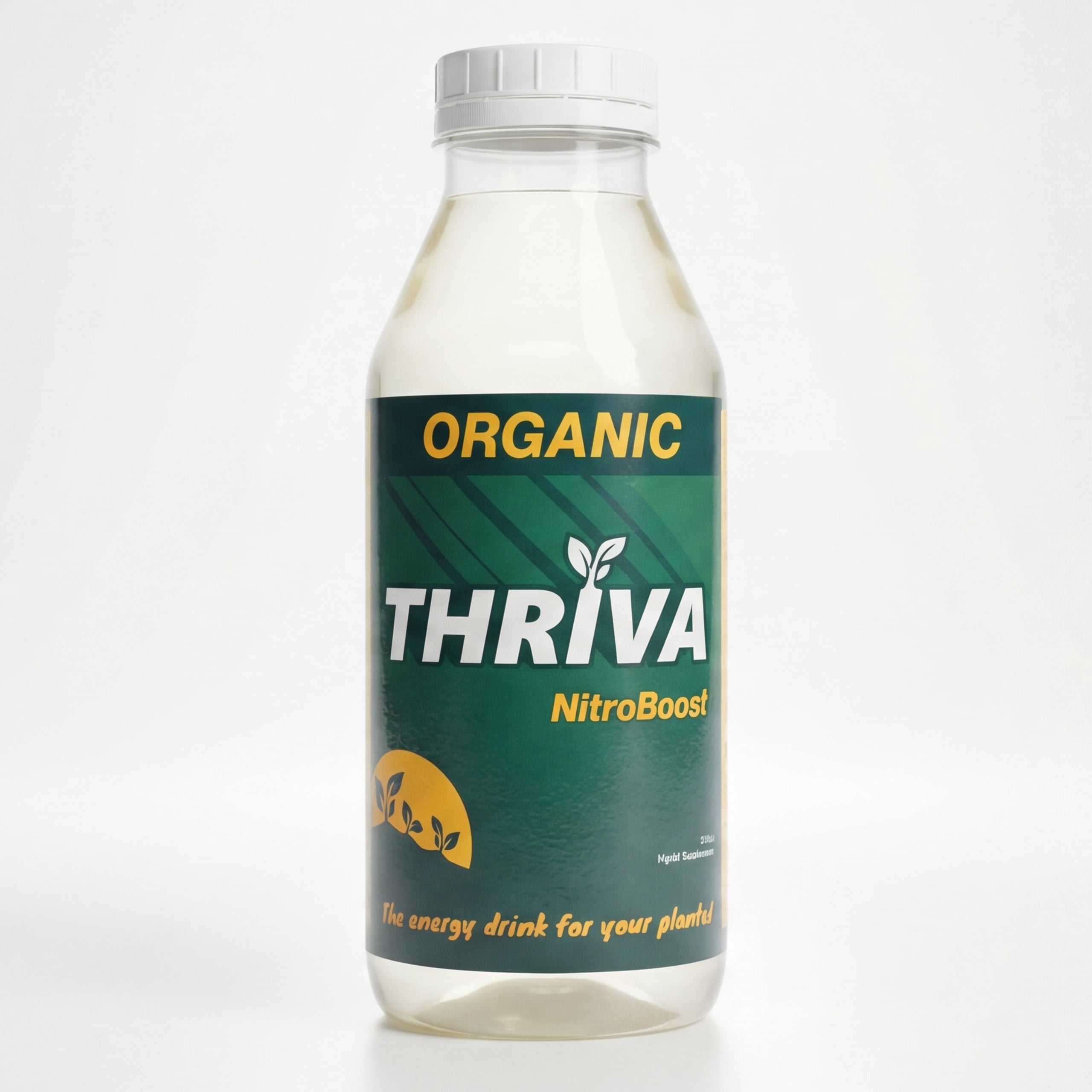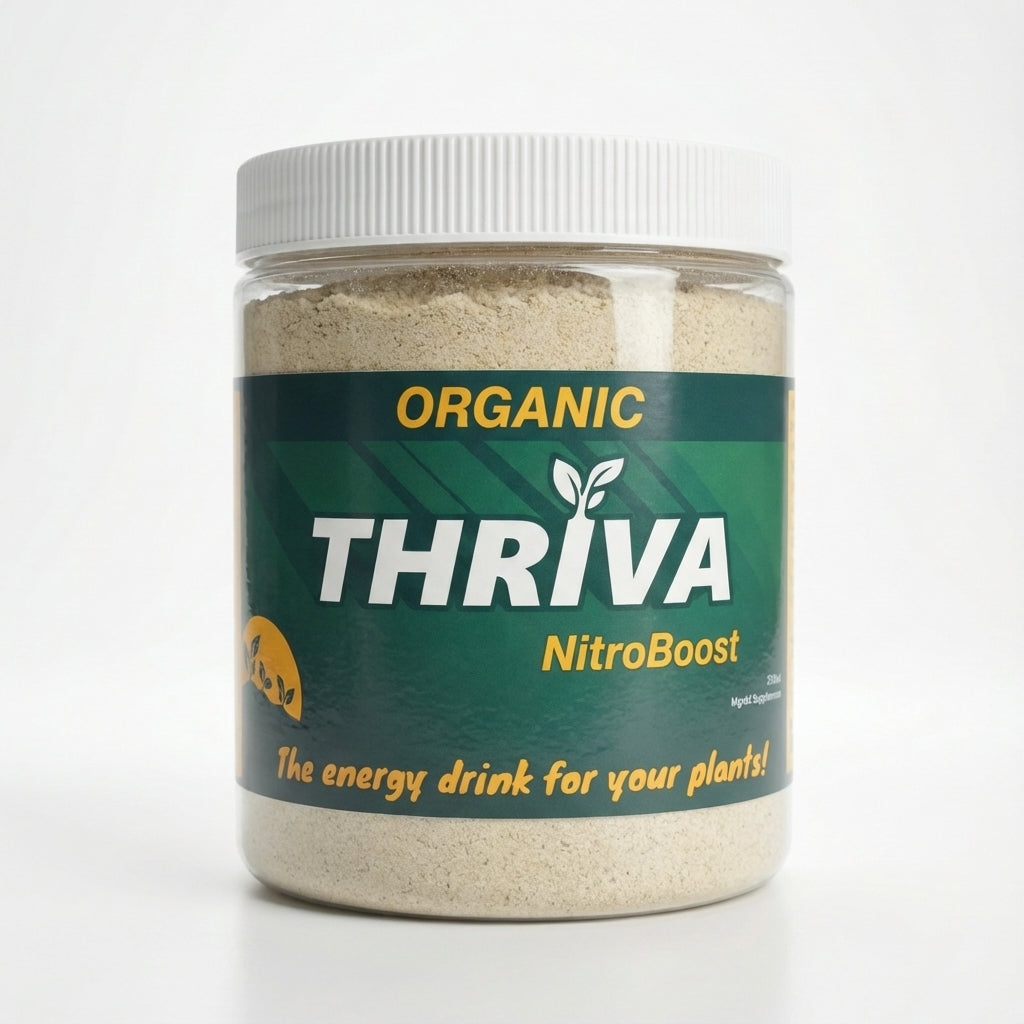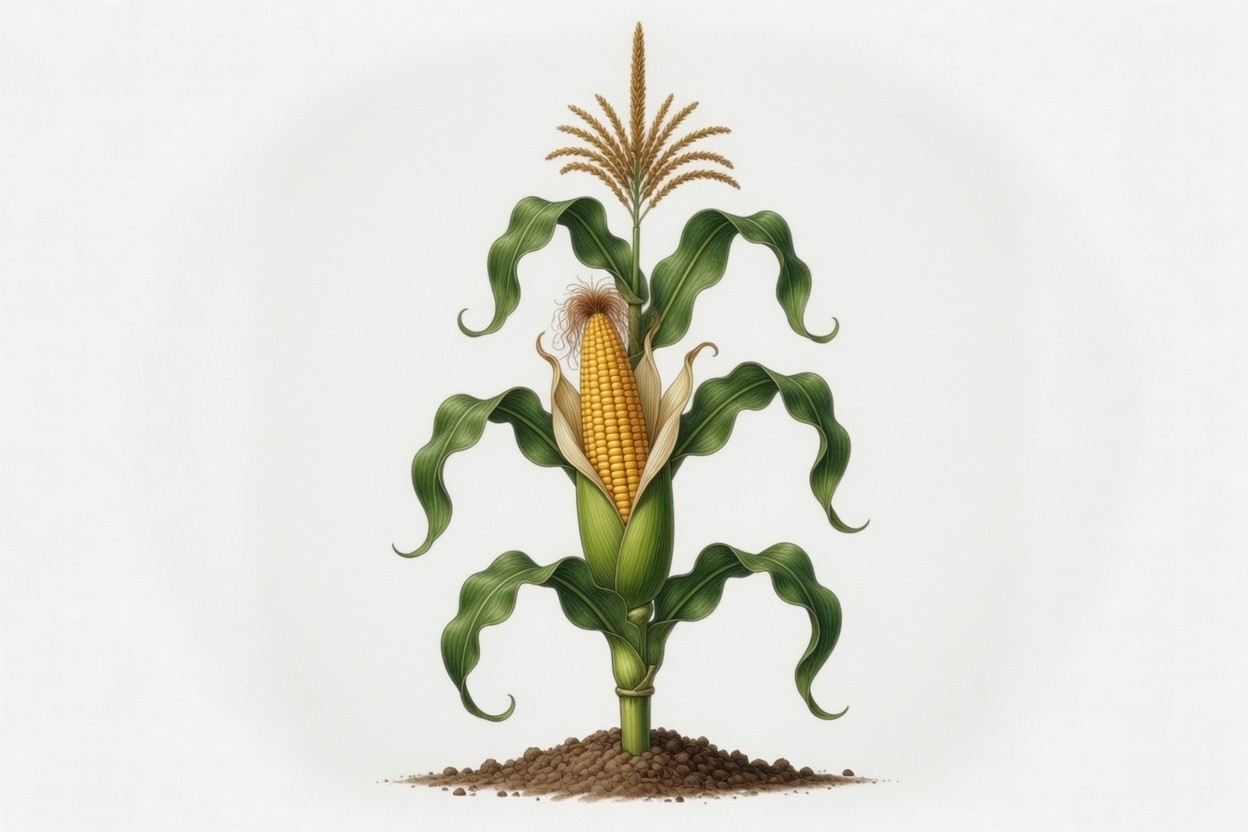
How to fertilize corn with Thriva organic ammonium fertilizer
Corn is the most nitrogen-hungry crop most home gardeners will grow. It is not a subtle feeder. It needs substantial nitrogen delivered in two to three split applications timed to its rapid vegetative surge. Get the timing right and corn grows fast and tall; miss the window and nitrogen deficiency sets in quickly, showing up as the distinctive yellowing from the leaf tip downward that gardeners call 'firing.'
Why nitrogen is the engine of corn growth
Nitrogen is required for the production of amino acids, proteins, and chlorophyll in corn. Research from Bayer Crop Science confirms that a 200-bushel corn crop requires 200–250 lb of nitrogen per acre. For home gardeners, the principle translates directly: corn needs relatively little nitrogen during the seedling stage, but demand escalates sharply at the V5–V6 growth stage (when the plant has 5–6 visible leaf collars and is 12–18 inches tall). Nitrogen application is recommended specifically at the 6–12 inch stage to ensure nitrogen is present before the growth surge begins.
Corn growth stages and nitrogen needs
Growth stage | Thriva amount | Notes |
At planting / emergence (VE–V3) | 0.75 oz per 3 ft of row | Apply in a band 2–3 inches from the seed row at planting, or side-dress when seedlings are 4–6 inches tall. Provides the early nitrogen that avoids seedling deficiency. |
Side-dress at V5–V6 (plants 12–18 inches tall) | 1.5 oz per 3 ft of row | The most critical application. This is the bulk nitrogen dose that fuels the rapid vegetative surge to tasseling. Mississippi State Extension recommends applying the majority of seasonal nitrogen at this stage. |
Pre-tassel (optional, VT approaching) | 0.5–0.75 oz per 3 ft of row | A third application approaching tassel is optional but beneficial in wet seasons where earlier nitrogen may have leached. Applications after V10 rarely increase yield, apply earlier if possible. |
Total Thriva per 3 ft of row: Approximately 2.75–3 oz over the season for sweet corn, applied in two to three split applications. Apply the bulk of nitrogen just before the rapid growth period is the key principle. Don't front-load it all at planting. |
What nitrogen deficiency looks like in corn
Corn nitrogen deficiency has a very recognizable appearance that distinguishes it from other nutrient problems:
'Firing' or yellowing that starts at the leaf tip and runs down the midrib of older, lower leaves first
The yellow color progresses up the plant as deficiency worsens. Upper leaves stay green longer
Thin, spindly stalks with reduced leaf area compared to healthy plants in the same planting
Poor ear development: small ears, incomplete kernel fill, or 'tip back' where kernels fail to develop at the tip of the ear
Block planting for pollination: Sweet corn must be planted in blocks (at least 4 rows wide) rather than single rows to ensure good pollination. Poor pollination produces ears with missing kernels, a result that is often mistaken for a nutrient deficiency. If your corn is producing poorly filled ears, check block size and pollination before adjusting your fertilizer program. |
Keep granules off corn foliage: When applying Thriva, apply in a band 4–6 inches from the base of the plant and water in well. Concentrated nitrogen granules sitting on corn leaves or in the whorl can cause leaf burn, especially in hot weather. Brush off any granules that land on foliage immediately. |
Frequently asked questions
How much Thriva does corn need?
About 2.75–3 oz per 3 feet of row over the season, split across two to three applications. The largest single dose should come as a side-dress when plants are 12–18 inches tall (V5–V6 stage), just before the rapid vegetative surge.
When is the most important time to fertilize corn?
The side-dress application at V5–V6 (12–18 inches tall) is the single most important application. This is when corn shifts into rapid growth and its nitrogen demand spikes. Missing this window or applying too late is a major nitrogen gap and significantly reduces yield potential.
Why are the lower leaves on my corn turning yellow?
This is classic nitrogen deficiency ('firing'). The yellowing starts at the leaf tip and runs down the midrib, affecting lower leaves first. If this appears before tasseling, a side-dress application of Thriva should help. If it appears very late in the season as the plant nears maturity, it is normal senescence rather than deficiency.
How many ears does one corn plant produce?
Most sweet corn varieties produce one to two ears per plant. Ear count and fill quality are directly tied to adequate nitrogen during the vegetative and early reproductive stages. Plants that were nitrogen-deficient before tasseling often produce one small, poorly filled ear rather than two full ones.