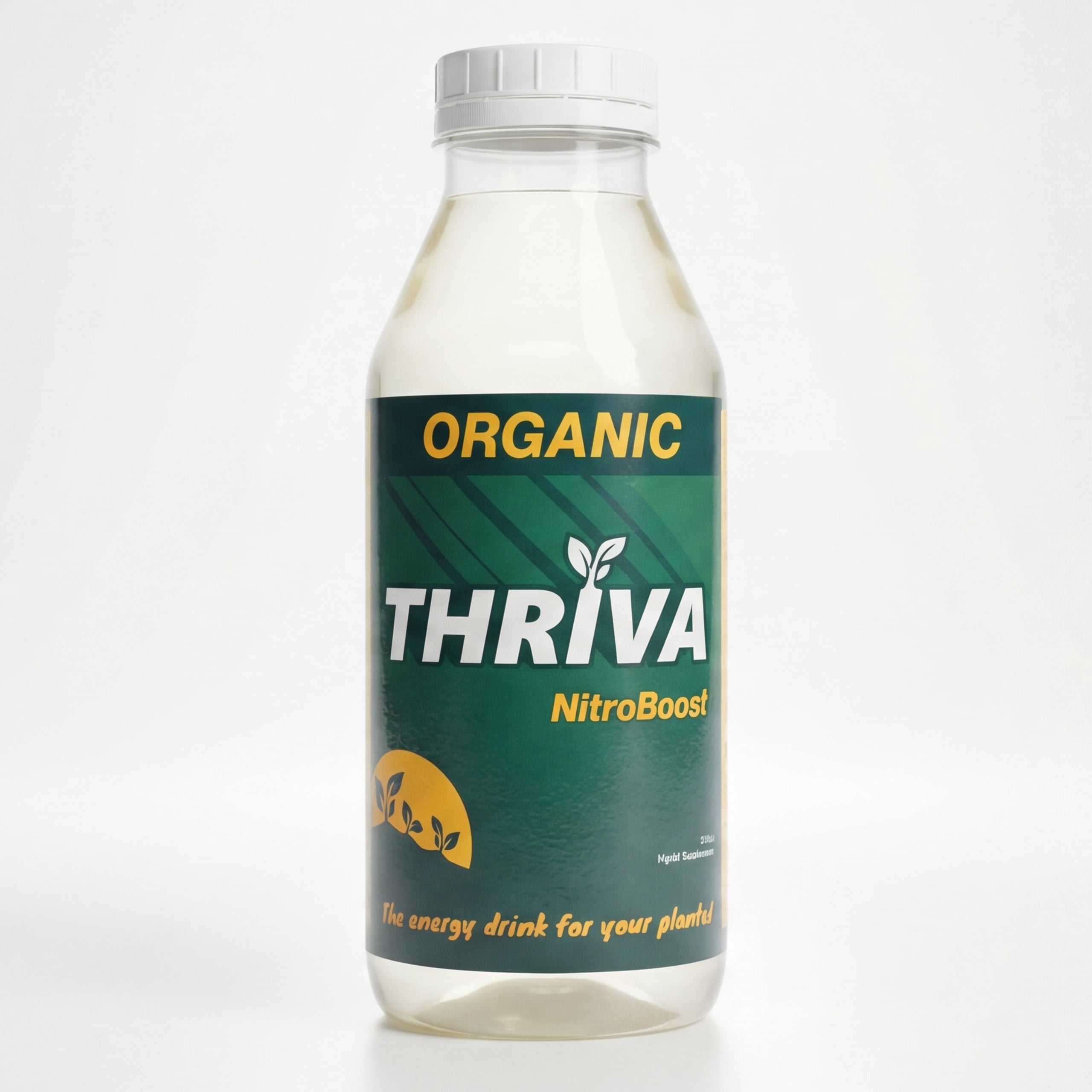
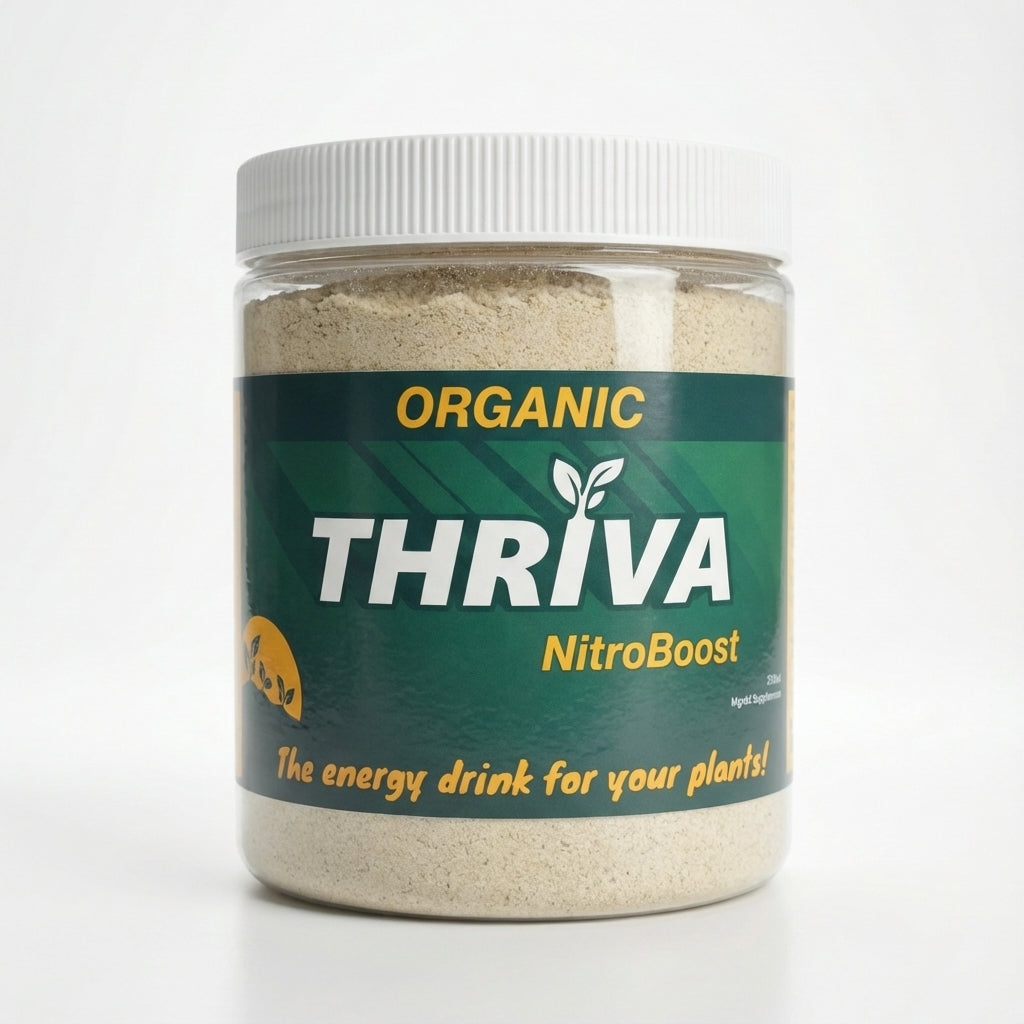
Thriva Boost Usage Guide for Broccoli
Broccoli is a cool-season brassica and one of the heaviest nitrogen feeders in the vegetable garden. Its harvestable head requires a large, vigorous canopy to develop properly. Without adequate nitrogen during the vegetative stage, plants produce small, loose heads or button prematurely.
Why nitrogen matters for broccoli
Broccoli's head formation is directly tied to vegetative vigor. A plant that hasn't built enough leaf mass before it begins to head will produce undersized or misshapen curds, a problem known as buttoning. Regional extension guidelines (University of Delaware, UMass) recommend split nitrogen applications for brassicas specifically because front-loading nitrogen at transplanting followed by an application 2–3 weeks later produces the most consistent results. Nitrogen should be dialed back as heading begins to avoid hollow stem and other quality issues.
Broccoli growth stages and nitrogen needs
Growth stage | Thriva amount | Notes |
At transplanting | 1 oz per plant | Apply at planting or within the first week. Critical for establishing the canopy that will support head formation. |
2–3 weeks after transplanting | 0.75 oz per plant | Side-dress once plants are established. This is the most important application for head size and quality. |
4–6 weeks after transplanting (pre-heading) | 0.5 oz per plant | A final light application before the head begins to form. Reduce rate to avoid hollow stem disorder. |
After side-shoot harvest (if applicable) | 0.25–0.5 oz | If harvesting side shoots after the main head, a light application encourages additional production. |
Total Thriva per plant: Approximately 2–2.5 oz over the full season. Broccoli is a true heavy feeder, so don't under-apply early. The vegetative stage is where nitrogen investment pays off most. |
Common nitrogen-related problems in broccoli
Buttoning: premature small head formation caused by stress or insufficient vegetative growth before heading
Hollow stem is linked to excess nitrogen late in the season. Apply conservatively at the pre-heading stage
Yellowing lower leaves is classic sign of nitrogen deficiency, especially in wet or sandy soils where leaching occurs
Loose, open heads are often caused by temperature stress combined with insufficient nitrogen during head formation
Temperature sensitivity: Broccoli is a cool-season crop. If transplanting in warm conditions (above 75°F), plants are more prone to stress and buttoning. Make sure nitrogen is adequate early to compensate but avoid high heat during heading regardless of fertilizer. |
Frequently asked questions
How much Thriva does broccoli need?
About 2–2.5 oz per plant over the season, split across three applications: at transplanting, 2–3 weeks later, and again at 4–6 weeks. Reduce the rate at the final application to avoid hollow stem.
Why is my broccoli forming tiny heads (buttoning)?
Buttoning is most commonly caused by cold stress at transplanting or insufficient vegetative growth before the plant attempts to head. Ensuring strong nitrogen early in the season helps prevent it by building enough leaf mass before heading begins.
Can I grow broccoli in fall and fertilize with Thriva?
Yes! Fall broccoli often outperforms spring plantings because temperatures are falling rather than rising. Use the same schedule: apply Thriva at transplanting and apply again 2–3 weeks later. Timing is important since fall plantings have a fixed window before frost.